June 19, 2026
Wall Thickness Guidelines for Large Injection Molded Components
Overview
- Wall thickness is critical to the quality and manufacturability of large injection-molded parts.
- Drawing on Richfields Corporation’s extensive experience, these design guidelines help product development managers minimize molding defects, optimize tooling reliability, and ensure efficient, high-performance production.
If there’s one thing to remember when designing large injection-molded parts, it’s that larger parts respond differently during molding. The longer flow lengths and slower cooling rates all place additional demands on both the component’s thickness and overall durability. To maintain uniformity in all components, it’s important to understand relevant factors to prevent avoidable manufacturing issues before tooling begins.
Knowing the key wall thickness guidelines for large injection-molded components makes it easier to strike a balance between structural requirements and manufacturing efficiency. Every design decision influences how the material fills the mold and performs throughout its service life.
At Richfields Corporation, we work closely with manufacturers to develop large plastic components that meet strict specifications for stable, repeatable production. Let’s discuss the common benchmarks for component wall thickness in injection molding.
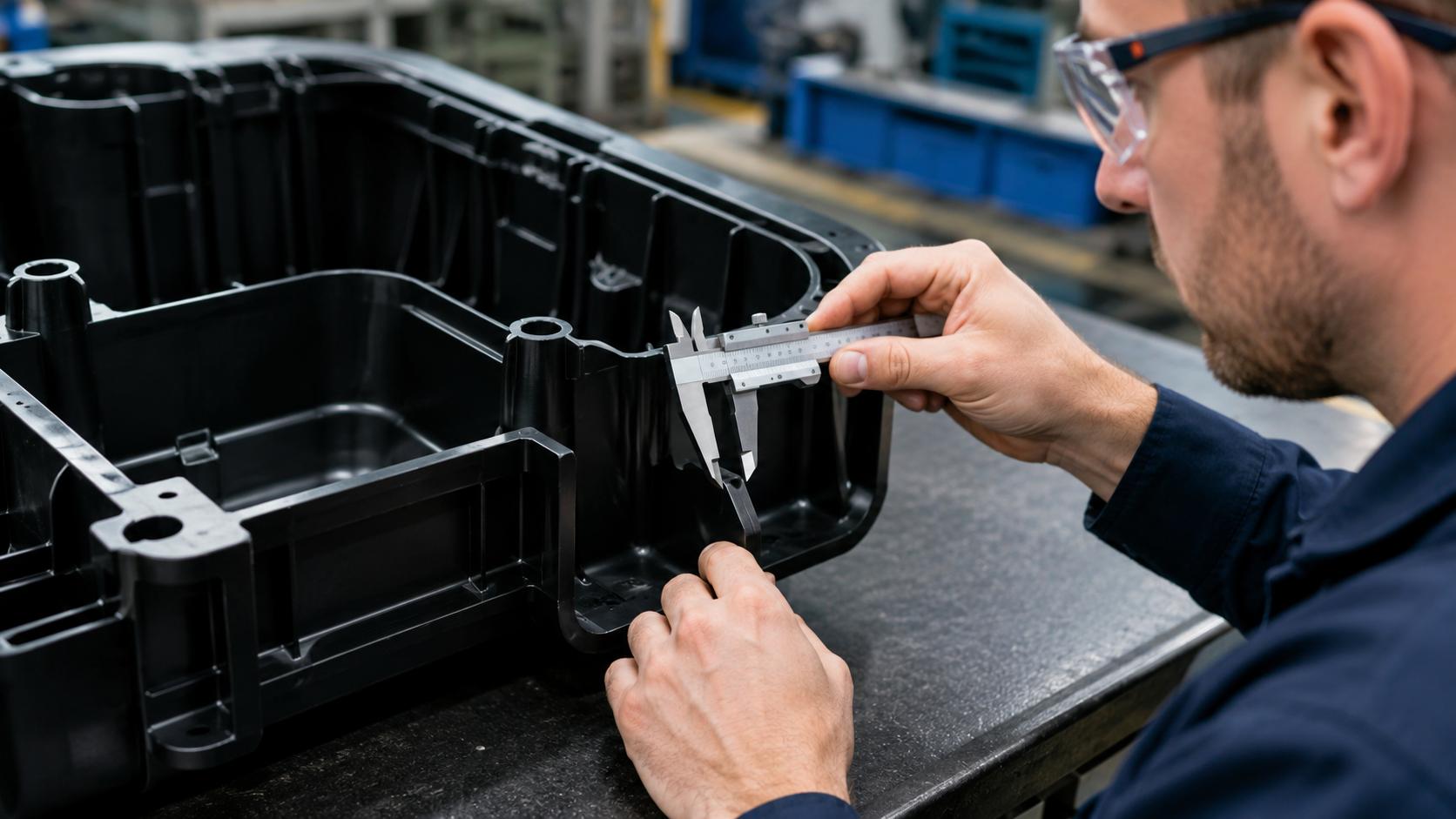
In injection molding, it’s important to keep wall thickness as consistent as possible throughout the entire part. Uniform walls allow molten plastic to flow evenly into the mold cavity and cool at a similar rate across the component. This creates more predictable shrinkage, reducing the likelihood of defects that become increasingly difficult to correct in larger components.
Some designs require thicker sections to accommodate mounting features and other additional functional requirements. When these transitions cannot be avoided, they should be introduced gradually using chamfers or generous radii that extend beyond the nominal wall thickness. These smooth transitions allow the material to flow naturally between sections, resulting in stronger parts.
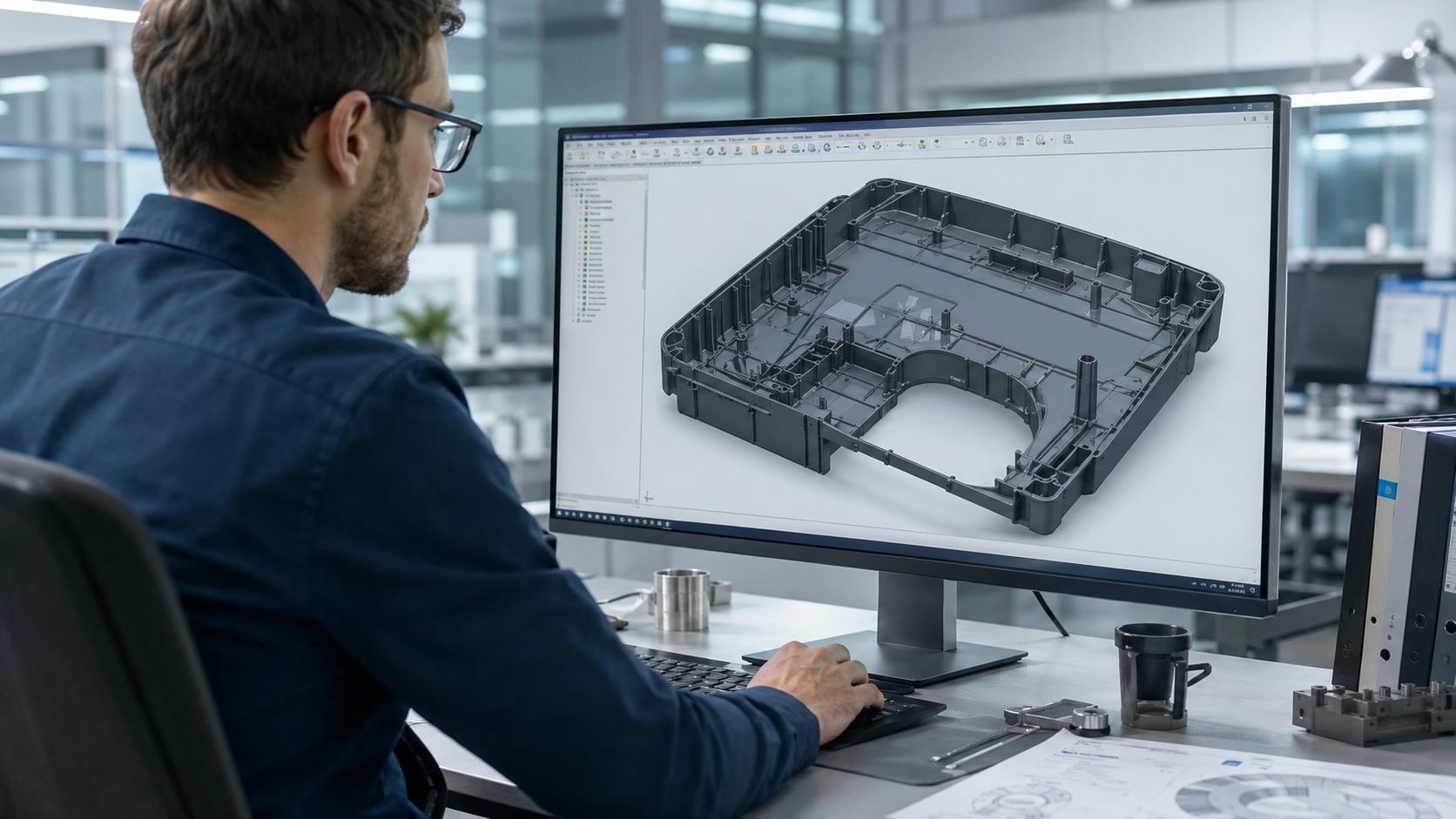
When large parts need to be extra sturdy, product development managers should first focus on ensuring their components have properly designed ribs. These provide structural reinforcement without creating large plastic masses that increase cooling time and material consumption. This approach allows engineers to improve the parts’ strength while maintaining efficient molding conditions.
A common design guideline is to size the ribs to about half the nominal wall thickness. Ribs that exceed this recommendation may create sink marks, as thicker rib bases cool more slowly than the surrounding wall. Proper rib proportions also help maintain cosmetic quality while improving their rigidity, making them more effective for reinforcement rather than simply thickening the entire component.
Large injection-molded parts need adequate draft angles because they shrink tightly against the mold core as they cool. Without sufficient draft, the part can stick during ejection, increasing the force required to remove it and raising the risks of damage to the tooling. These issues become more significant as part size and surface area increase.
As a general rule, all vertical surfaces should include draft angles of 0.5° or more on each side. The appropriate angle depends on factors such as material selection and feature depth, with textured surfaces often requiring additional draft. Incorporating drafts during the initial design supports smoother production and improves overall manufacturing consistency.
Rounded internal corners are essential for two things: maintaining manufacturing quality and structural performance. Sharp inside corners can interrupt material flow as the mold fills, creating areas where stress can concentrate after the part cools. Over time, these stress concentrations may reduce durability in parts subjected to repeated loading.
Inside radii should generally measure between 0.25 and 0.5 times the nominal wall thickness whenever the design allows. This simple adjustment promotes smoother resin flow while distributing mechanical loads more evenly throughout the finished part. Radiused corners also improve mold filling efficiency, making it easier to produce complex geometries with fewer molding defects.
Wall thickness recommendations should always be validated against the material selected for production. Every thermoplastic has distinct flow characteristics and processing requirements that influence the maximum section sizes it can reliably fill. Applying a single wall thickness rule across all materials often results in unnecessary production issues.
Rigid engineering materials such as polycarbonate typically perform best with wall thicknesses of about 3.8 mm, while highly flowable materials such as ABS can consistently fill walls approximately between 1.2 mm and 3.5 mm. However, engineers should always review the material supplier’s recommended processing range before finalizing the part design. Selecting the right resin is key to helping the finished component achieve its intended mechanical properties.
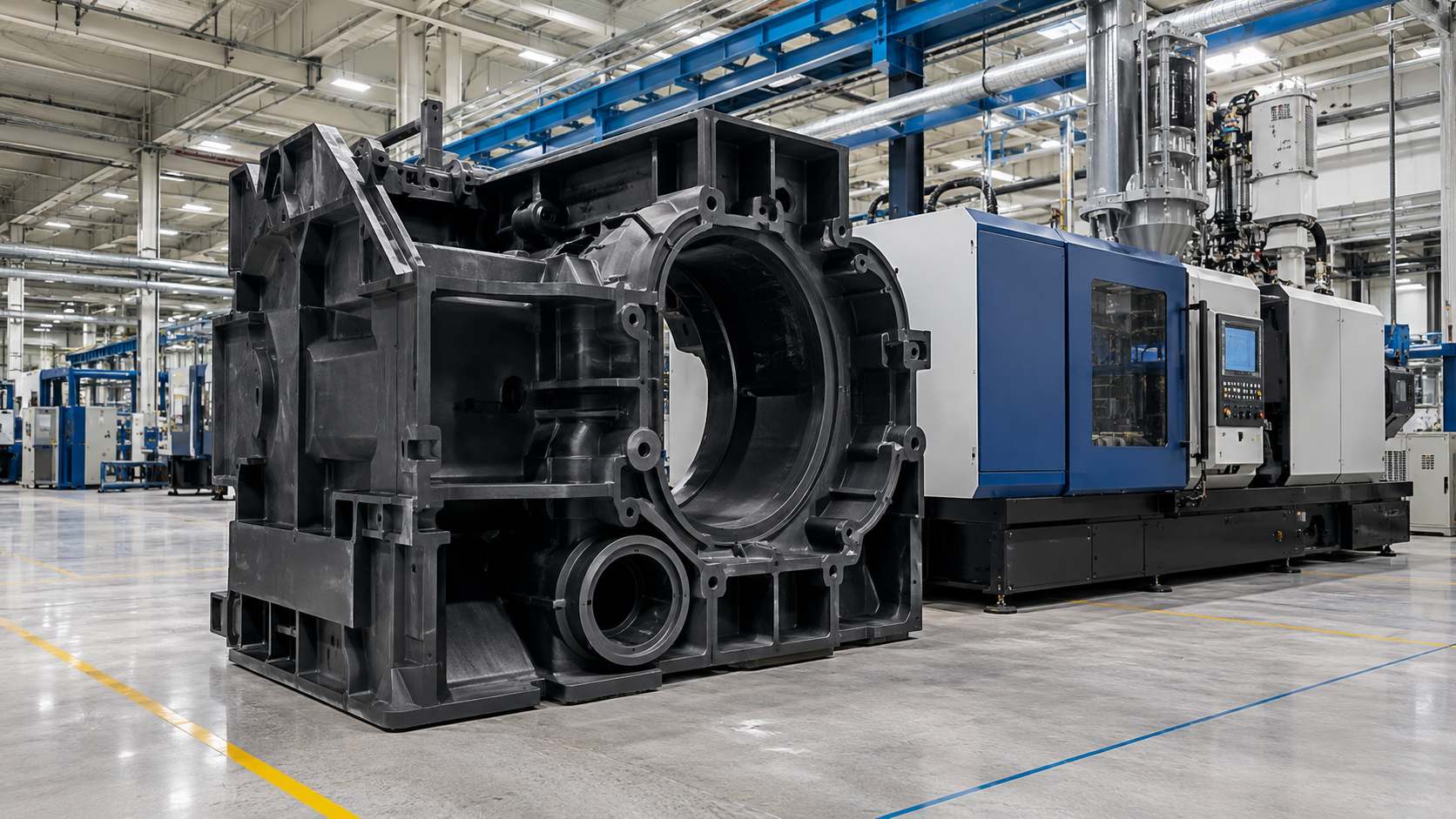
Richfields Corporation combines custom mold development with high-tonnage injection molding to help product teams deliver precision plastic components.
From design review and material selection through to full-scale manufacturing, we work closely with clients to identify design improvements and optimize efficiency. Operating under internationally recognized quality standards, we provide global manufacturers with the precision and consistency required for complex, large-volume projects.
Successful large-part injection molding depends heavily on proper wall thickness. Maintaining uniform walls and selecting the appropriate materials all contribute to better mold filling and more reliable production overall. By applying the right wall-thickness guidelines for large injection-molded components, teams face fewer design revisions and improve product quality throughout the manufacturing process.
Developing large plastic components becomes more efficient when experienced engineering support is involved throughout the design process. Richfields Corporation helps manufacturers optimize part designs through custom tooling expertise and injection molding capabilities that meet high production standards in complex industrial applications. Contact us today to ensure dependable production success.
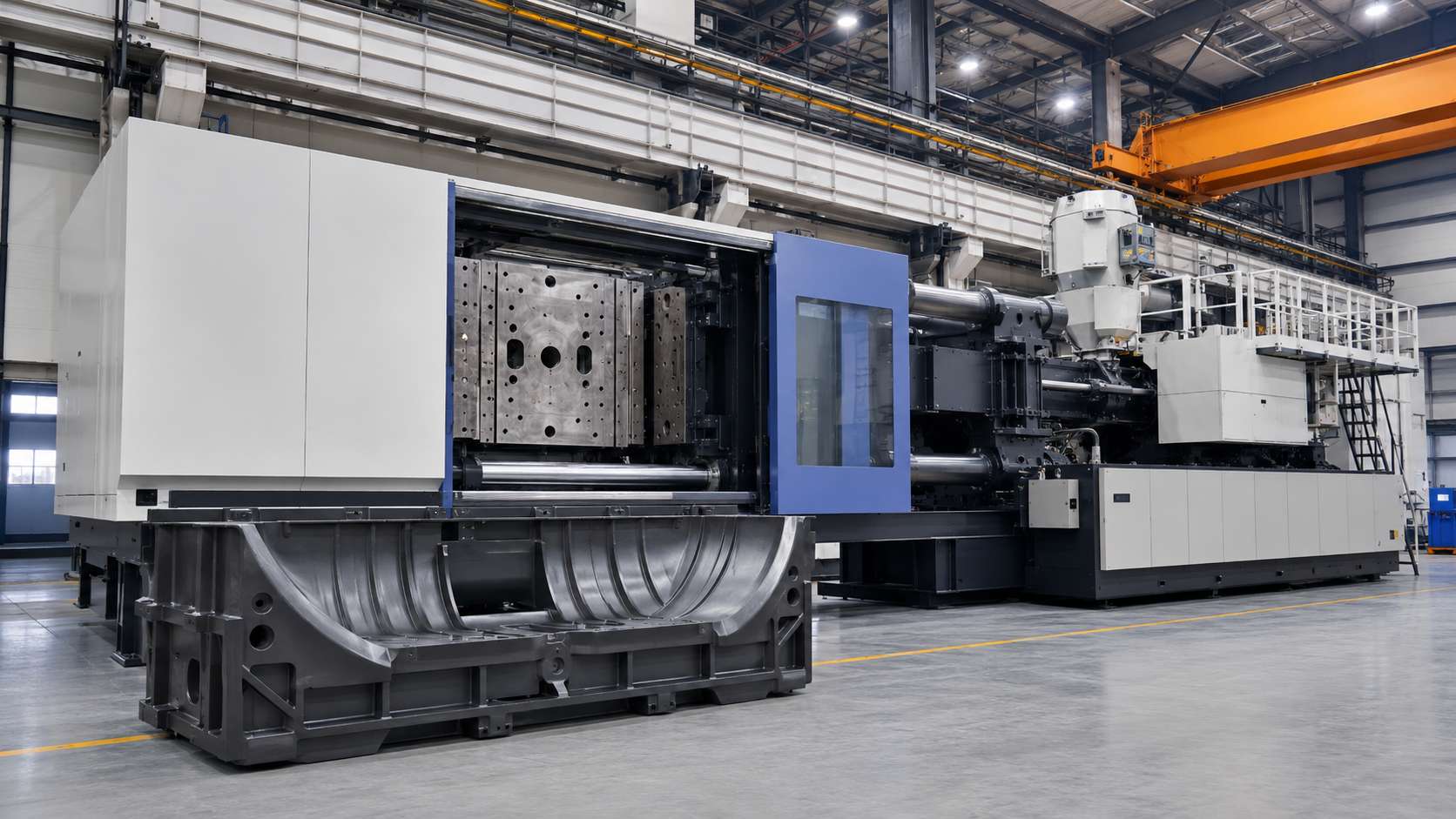
Learn how to evaluate high-tonnage injection molding capacity for large components using key engineering factors for reliable, efficient production.
Read more
Learn practical ways to assess tooling quotes from injection molding service providers in China for better sourcing decisions and long-term production value.
Read more
Discover the real cost drivers behind large-part injection mold tooling to understand what influences tooling investment before requesting quotations.
Read more
Prevent defects in large injection molded parts by controlling cooling, material flow, tooling design, and process conditions from the start.
Read more