January 8, 2026
Most Common Manufacturing Methods for Large-Scale Plastic Products
Overview
- Choosing the right production method plays a major role in how effectively a plastic product moves from idea to mass production.
- Each process offers its own strengths. Injection molding in particular promises durability, precision, and efficiency in every output to meet high demand and quality standards.
- Together, these methods show how modern manufacturing can meet different design goals with efficiency and quality.
- Richfields Corporation combines efficiency with innovative techniques through quality injection-molding services. Product development managers can trust us to meet their product lines’ unique requirements.
Creating successful plastic products starts with choosing the right manufacturing process. For product development managers (PDMs), this decision determines how efficiently designs can move from prototype to large-scale production. They need a solution that is not only cost-effective but can also guarantee consistent quality.
The most common manufacturing methods for large-scale plastic products each offer distinct advantages, depending on complexity and production volume. Understanding these options helps teams identify the process that aligns best with their product goals. Read on to explore how each method supports efficient manufacturing.
Injection molding is a stand-out method for one reason: precision. It enables product teams to achieve consistent shapes and dimensions across thousands of units, making it ideal for scaling high-integrity designs. From concept to rollout, every component reliably meets the specifications that uphold quality.
With the right partner, companies effectively bring their product ideas to life. Partnering with an experienced injection molding provider like Richfields Corporation gives companies access to advanced equipment and technical expertise. Our innovative manufacturing methods produce complex designs at scale, turning precise engineering into tangible results.
How It Works: Molten plastic is injected into a precision-engineered mold under high pressure. Once it’s filled, it’s given time to cool and solidify. Ejector systems then release the finished part for inspection or assembly.
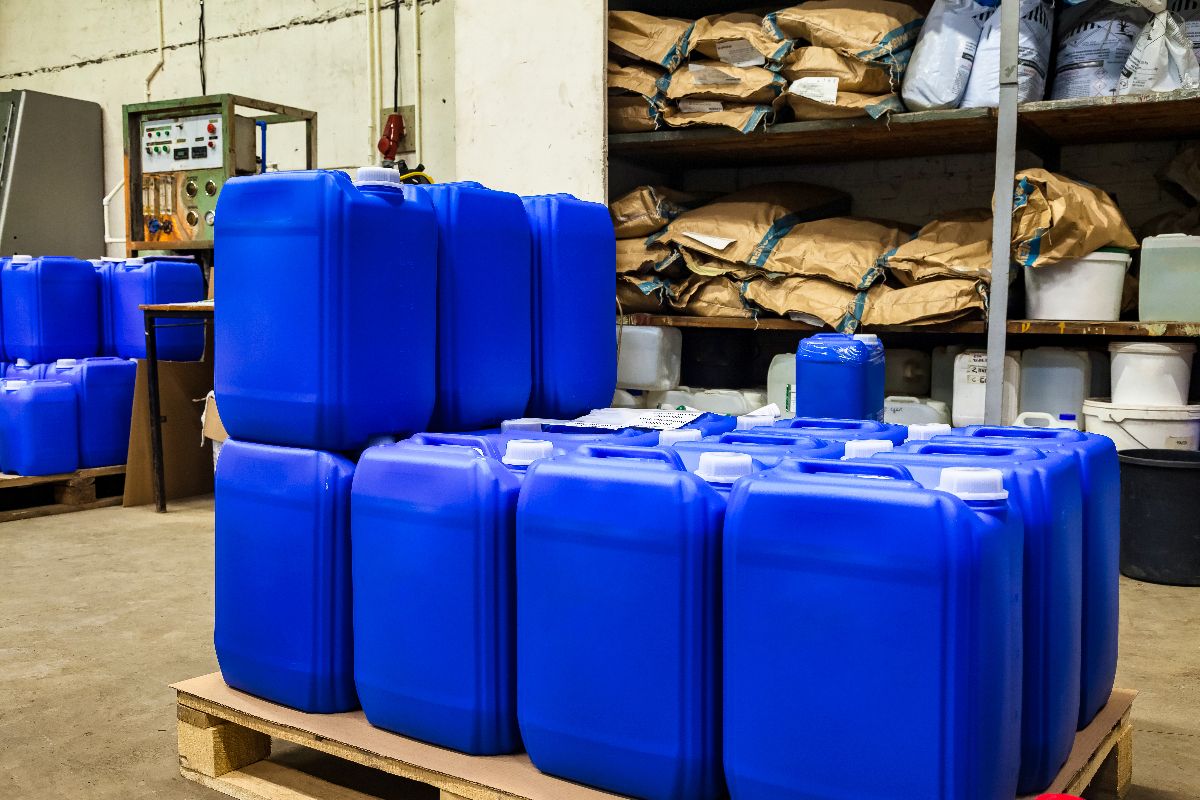
Best For: This method is best used for items that require tight tolerances and dimensional accuracy across large batches. These include storage containers or plastic chairs, which require uniformity for appeal and easy stacking.
Pros:
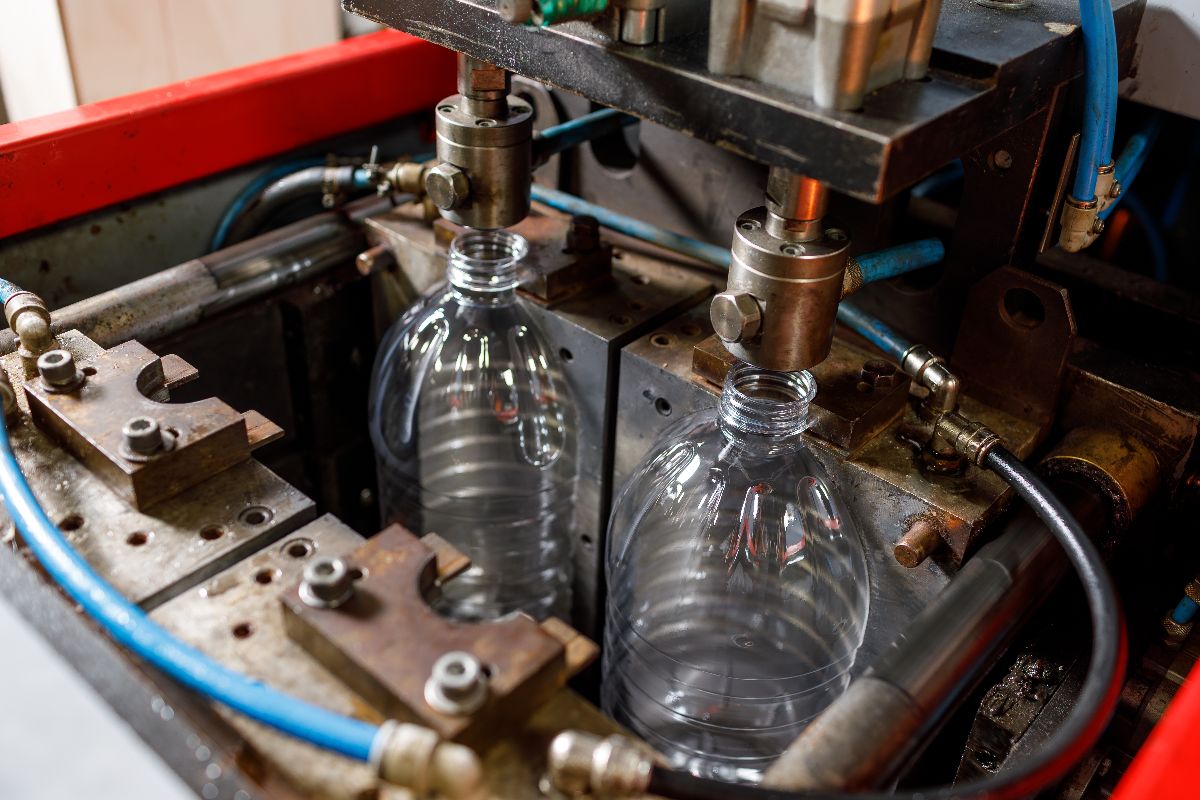
When hollow products require durability, blow molding delivers efficiency and integrity into one process. It forms lightweight parts that withstand pressure and daily wear — ideal for overcoming strength and material efficiency challenges in demanding runs.
Its strength lies in its flexibility. Product engineers can utilize this method to refine wall thickness or reinforcement zones according to design requirements. As a result, they get faster iteration and consistent output.
How It Works: A molten plastic parison is clamped inside a mold. Then, compressed air inflates it, pressing material against the mold’s walls. Once it’s cooled, the finished hollow product is released from the mold.
Best For: Hollow parts like containers, fuel tanks, or bottles. Its uniform wall formation ensures structural integrity without material wastage.
Pros:
If companies look for consistency, extrusion is the preferred method for producing continuous plastic profiles. It can retain precise dimensions across extensive lengths. This process ensures steady quality and material efficiency, especially when managing repetitive production lines.
Its advantage goes beyond uniform output. Extrusion supports long-term reliability by minimizing warping and inconsistencies across the profile, prolonging the products’ lifespan.
How It Works: Plastic pellets are melted and pushed through a shaped die. Cooling systems solidify the continuous profile, and afterwards, cutters or rollers shape the extruded material based on client specifications.
Best For: Extrusion is ideal for continuous profiles like tubings, channels, and siding. It can reliably produce consistent shapes over long lengths efficiently.
Pros:
Rotational molding excels at producing large, hollow, and impact-resistant plastic parts with uniform strength. Its controlled heating and rotation process make it a reliable choice for building durable equipment in demanding environments.
With lower tooling costs and easier mold adjustments, teams can efficiently refine shapes or test variations without halting production.
How It Works: Plastic powder is added to a mold that rotates on two axes. Heat melts the powder and evenly coats the mold interior. Once the material has cooled down, it creates a hollow, uniform component.
Best For: Large tanks, bins, or containers. It’s best for creating items that need uniform thickness without seams or joints.
Pros:
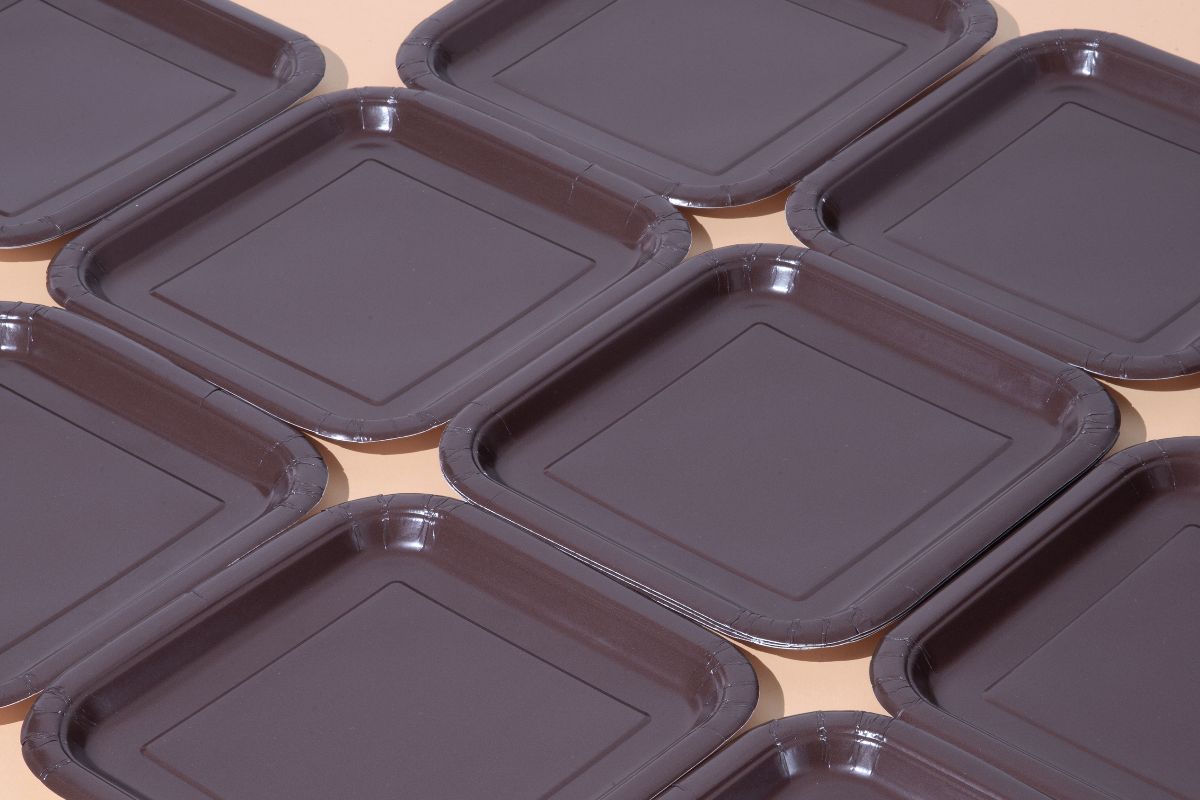
One straightforward manufacturing method is thermoforming — it shapes detailed plastic components from heated flat sheets. It enables efficient production of items such as panels, casing, or enclosures by forming the material over a mold. For teams seeking quick turnarounds and design flexibility, this makes it a practical choice.
Since adjustments to thickness or textures can be made rapidly, thermoforming supports faster prototyping. Teams can bring functional large-scale products to market with minimal delay.
How It Works: Plastic sheets are heated until they are pliable. In this state, they’re stretched over a mold. Vacuum or pressure ensures the sheet conforms precisely, and after cooling, excess material is trimmed to finalize the part.
Best For: Thermoforming is optimal for creating trays, panels, or even packaging components. It’s used where thin, uniform parts are required with minimal post-processing.
Pros:
Each technique brings unique advantages to specific design and production goals. For PDMs, choosing the best process is essential for ensuring every concept transitions smoothly into high-quality outputs.
Among the most common manufacturing methods for large-scale products, injection molding continues to lead in reliability. Richfields Corporation delivers this expertise through innovative equipment, high-tonnage capabilities, and a skilled team dedicated to producing consistent results. Contact us today to learn how we can bring your concepts to life.
Overview Selecting the right injection molding machine size is vital to prevent defects such as flashing, warping, or incomplete fills. Proper tonnage and shot volume ensure part consistency and protect molds from stress. Richfields specializes in providing tailored presses worldwide that precisely match project requirements, securing quality production and cost efficiency with expert machine sizing […]
Read more
What are the common large-part design mistakes that complicate manufacturing? Ignoring manufacturing process limitations Over-specifying tolerances Poor material selection Inconsistent wall thickness Neglecting draft angles Covercomplicating the design Using non-standard components Overview Large-part injection molding often fails when designs ignore limitations involved in the processing. To avoid this, early collaboration is the best way to […]
Read more
Overview Large plastic injection molding uses high-tonnage machines to mold large, thick, and complex parts with precision and consistency. The procedure supports designs that require significant clamping force, shot volume, and physical mold size, ensuring defect-free, structurally sound components. Richfields is a leading provider, offering advanced machinery and technology to deliver high-quality large plastic injection […]
Read more
Overview Expanding product lines with new SKUs involves overcoming design and manufacturability challenges that often cause costly delays. Careful planning, partner evaluation, and thorough vetting are essential to ensure scalable, high-quality production. Richfields offers expert injection molding support, early engineering input, and advanced tooling to speed up development and deliver precise, reliable results worldwide. Expanding […]
Read more