April 14, 2026
Designing Large Plastic Injection Molds: Key Challenges and Solutions
Overview
- Designing large plastic injection molds involves key challenges such as achieving uniform material flow, managing cooling to prevent warping, meeting high clamping requirements, venting trapped gases, and ensuring long-term mold durability.
- Solutions include applying mold flow analysis, optimizing gate placement, fine-tuning cooling and venting systems, and selecting the right materials and process parameters.
- By addressing these factors early, companies in the USA can minimize defects, improve efficiency, and produce reliable, high-quality components consistently.
Designing large plastic parts is one thing, while turning them into manufacturable molds is another. As component size increases, creative concepts must contend with material flow limits, cooling behavior, tooling constraints, and production tolerances that don’t appear at smaller scales. This is where large plastic injection molds’ design challenges and solutions become critical. It bridges the gap between ambitious design intent and reliable, repeatable manufacturing.
Addressing these challenges early helps prevent costly redesigns, performance issues, and delays once production begins. For companies in the USA developing large-format plastic components, understanding how scale affects mold design is essential to delivering parts that perform as intended in real-world production environments.

Designing large molds involves several interacting technical factors. Each stage—from material selection to mold durability—can affect timelines, costs, and overall part consistency.
One of the primary challenges in large mold design is achieving uniform material flow and complete cavity fill. Molten polymer traveling through long runners and multiple gates experiences gradients in temperature, pressure, and velocity, which can lead to non-uniform fill fronts.
Complex geometries often exacerbate these effects, producing zones of low flow velocity, high shear stress, or incomplete filling. Deep cores or asymmetric sections are especially prone to uneven melt front progression, which may result in surface defects or internal weaknesses.
Cooling large cavities presents challenges due to the component’s significant thermal mass and varying wall thicknesses. Uneven solidification can generate internal stresses, causing dimensional inconsistencies or warping.
Sections that cool slowly contrast with faster-cooling areas, creating temperature gradients that interact with the part geometry. Without careful thermal management, these differences can result in sink marks, surface deviations, or structural weaknesses.
Large molds require substantial clamping force to maintain core-to-cavity contact under high injection pressures. Uneven load distribution across the plate can cause subtle dimensional shifts, micro-gaps at parting lines, or inconsistent contact between mold halves.
When a mold approaches or exceeds machine capacity, these mechanical load differentials are amplified, making proper clamping design and machine selection critical for consistent production.
Entrapped air and gases displaced by the advancing melt front create localized pressure buildup in deep cores and recessed areas. Inadequate vent pathways allow the compressed air to persist, leading to observable burn marks or gas-induced surface anomalies.
Areas where the melt encounters stagnant air may demonstrate elevated back pressure and minor thermal inconsistencies. That combination — trapped gas plus advancing polymer — frequently produces visible defects in the affected areas.
High-pressure cycles and thermal cycling generate wear on core and cavity surfaces, including surface fatigue, micro-cracking, and dimensional drift.
Large molds also place significant stress on guides, ejector systems, and support structures. Over repeated cycles, these combined mechanical and thermal stresses can produce deformation, increased clearances, and subtle alignment shifts, which can impact long-term reliability.
Overcoming these challenges requires targeted strategies that address material selection, mold design, process parameters, and machine integration.
Using mold flow analysis allows you to predict how the molten plastic will move through the mold. This helps identify areas where the material might fill too slowly or trap air.
Adjusting the gate geometry and placement ensures the plastic flows evenly into all parts of the mold, reducing defects and making it easier to produce consistent, high-quality components.
Optimizing cooling channels and vent paths ensures heat and gases are removed efficiently during production. Conformal cooling channels follow the part geometry to keep temperatures consistent, while well-placed vent paths allow trapped air to escape.
These improvements minimize warping, surface defects, and inconsistencies, helping you produce parts that meet specifications and maintain quality across large production runs.
Choosing the right resin with suitable melt viscosity, thermal conductivity, and shrinkage characteristics sets the foundation for smooth molding. Adjusting injection speed, melt temperature, and hold/pack profiles ensures the plastic flows and solidifies properly.
By fine-tuning these settings, you can achieve better dimensional accuracy, prevent defects, and ensure each part comes out reliable and ready for use, even in large, complex molds.
By understanding what are the large plastic injection molds design challenges and their solutions, you can better plan and execute mold designs that reduce defects, improve production efficiency, and deliver consistent, high-quality components.
Richfields, a leading large injection molding company with a network across China, the USA, and Europe, manufactures high-quality large plastic molds to meet your production needs. Our solutions enhance mold performance, reduce defects, and ensure reliable results. Reach out to us today to bring your custom molds and products to life.
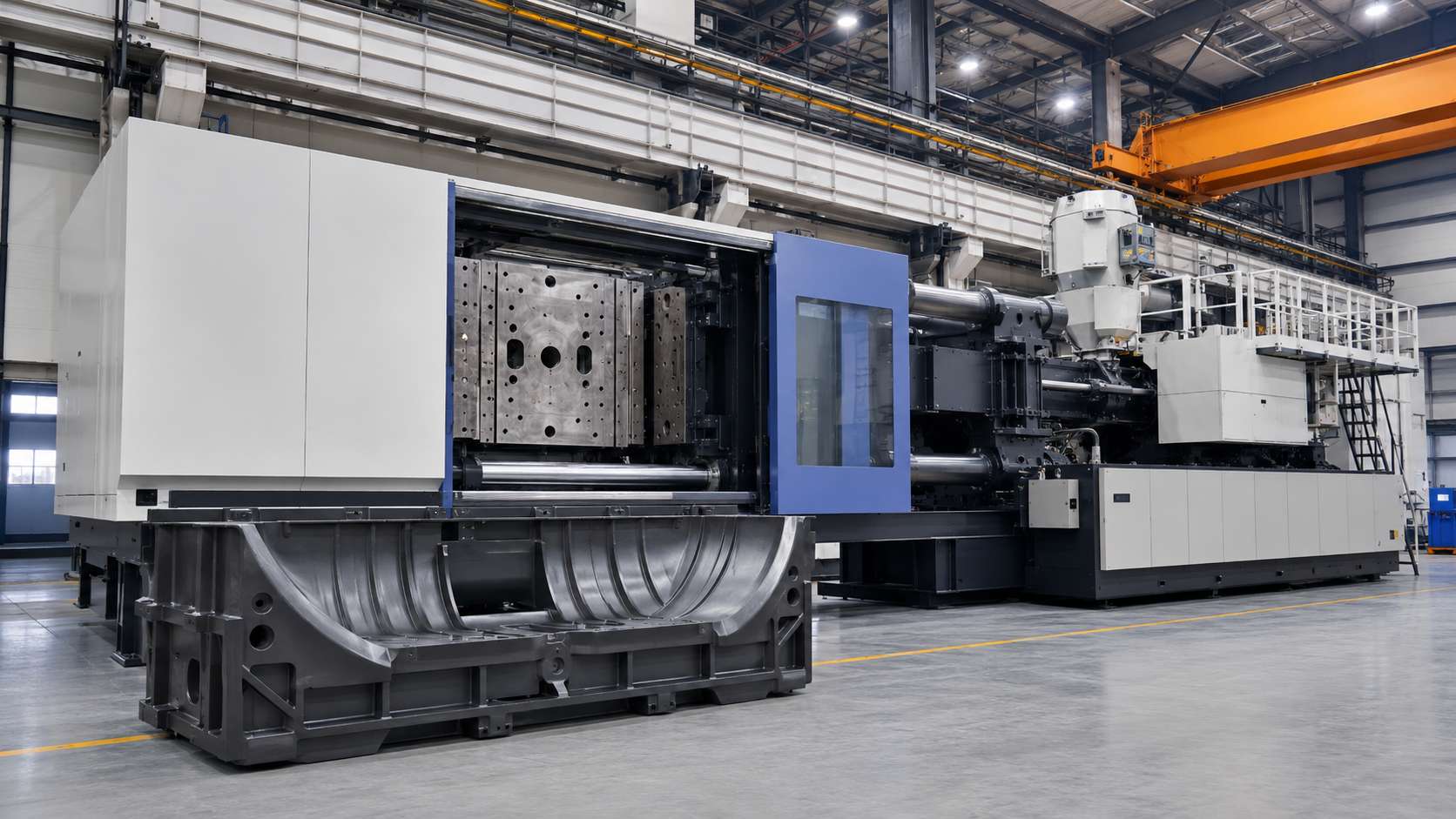
Learn how to evaluate high-tonnage injection molding capacity for large components using key engineering factors for reliable, efficient production.
Read more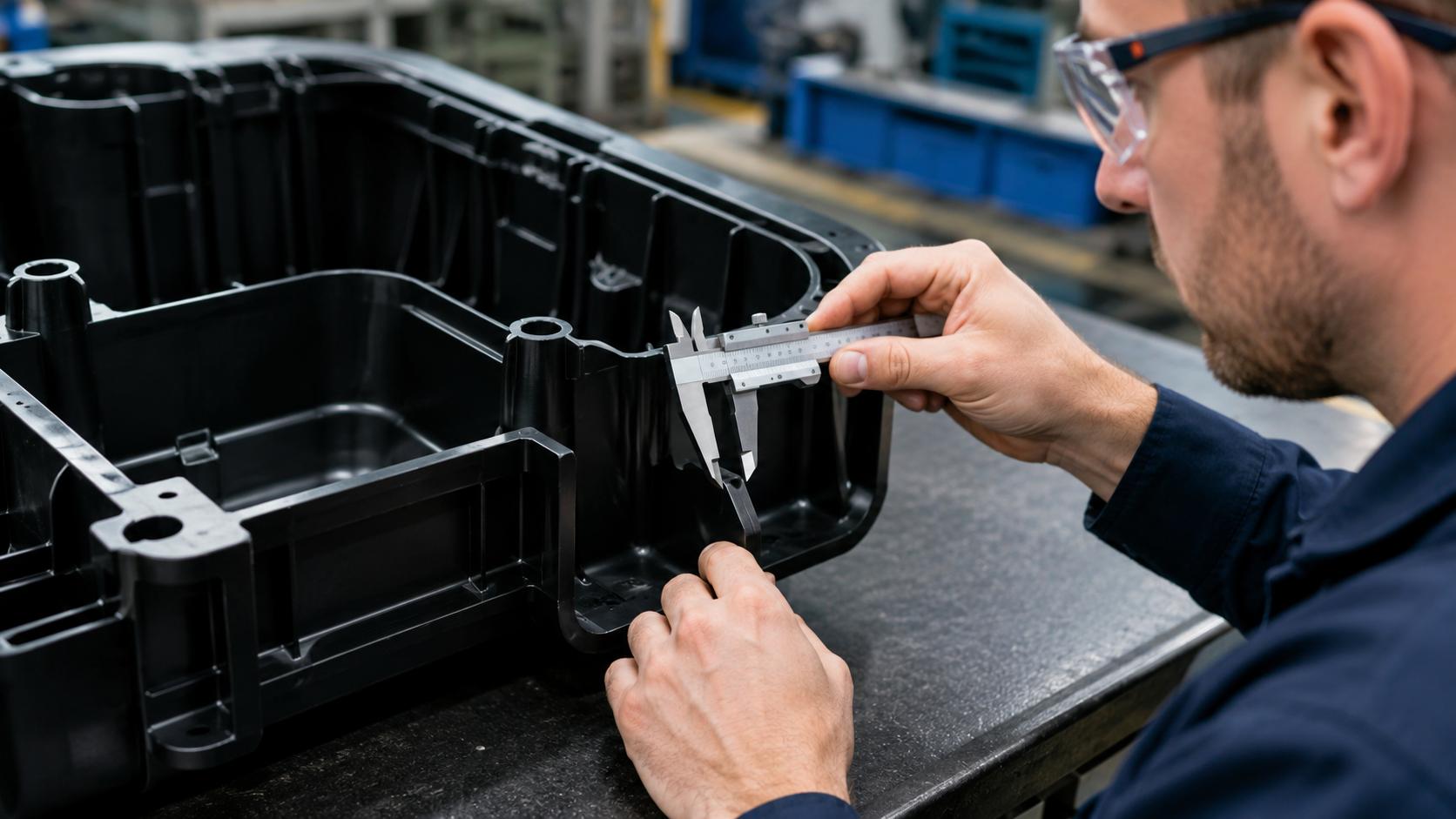
Learn the key wall-thickness guidelines for large injection-molded components that product developers must follow to optimize part performance.
Read more
Learn practical ways to assess tooling quotes from injection molding service providers in China for better sourcing decisions and long-term production value.
Read more
Discover the real cost drivers behind large-part injection mold tooling to understand what influences tooling investment before requesting quotations.
Read more