April 4, 2026
Questions to Ask Before Finalizing a Large Injection Mold Design
Overview
- Finalizing a large injection mold design requires more than checking dimensions—it demands a clear understanding of manufacturability, material behavior, and production realities at scale.
- Asking the right questions early helps prevent costly redesigns, tooling issues, and performance failures.
- At Richfields, we help engineering teams validate large mold designs early and align designs to protect long-term efficiency of the final product.
Finalizing a large injection mold design is a critical step that directly affects production efficiency, cost, and product quality. A design that looks good on paper may still face challenges once it reaches the manufacturing floor, especially at scale.
This is why taking a design-for-manufacturing perspective early on is essential. To avoid such risks, designers must know the right questions to ask before finalizing large injection mold designs. It will help ensure the mold is practical, scalable, and aligned with material behavior, tooling constraints, and production goals.
In this article, we’ll explore the key considerations that help bridge the gap between design intent and manufacturable reality.

Before manufacturability is evaluated, the part must first be clearly defined in terms of its functional intent, operating environment, and expected material behavior. These factors form the foundation of every subsequent decision in the injection molding process. This is vital because it will determine how the part will be molded, how it will perform in use, and how reliably it can be produced at scale.
Because injection molding relies on fixed tooling and material-specific behavior, early assumptions quickly become locked into the process. For designers, understanding the constraints early on prevents later issues of material incompatibility. So, you can ask your manufacturer the following:
Taken together, these considerations confirm whether the part design and material choice can coexist within the practical limits of injection molding.
Unlike subtractive methods, where material can be corrected after the fact, molding locks design decisions into steel. Once a tool is built, the geometry of the part dictates how molten plastic flows, cools, and solidifies on every cycle, leaving little room for adjustment.
When fundamental design elements such as wall thickness, draft angles, or internal features are defined without considering this behavior, there could be issues in terms of manufacturability. These issues may not prevent the part from forming, but they compromise dimensional stability and long-term performance, especially in high-volume production.
The following questions focus on whether the part geometry supports predictable filling, uniform cooling, and reliable ejection.

A mold that works technically but fails operationally is still a failure. Even a well-designed tool can impact business profitability if it does not align with the realities of production capacity, factory constraints, and downstream processes.
At this stage, the focus shifts from whether the part can be molded to whether it can be produced efficiently, repeatedly, and on schedule. The following questions help evaluate if your manufacturer has the capability to bring your design to life.
While individual questions guide specific decisions, successful large mold projects rely on broader considerations that influence how those questions are addressed. Here’s what you need to know:
Large parts magnify geometric inefficiencies—and this is influenced by complex features, sharp transitions, or inconsistent thicknesses. It may be manageable in smaller molds, but it becomes a high-risk element at scale.
For designers, evaluating geometry according to size and quantity helps balance functionality with mold stability and repeatable production.
Material selection cannot be separated from manufacturing strategy. One major consideration is the resin behavior. In larger molds, manufacturers may face unpredictable and inconsistent flow length, cooling time, and tooling wear.
That said, considering material and manufacturing together ensures that performance targets align with realistic production capabilities.
Large mold success depends on early collaboration between design, tooling, and manufacturing teams.
Richfields supports this level of coordination by bringing design, tooling, and manufacturing teams together early through structured reviews and mold flow analysis. This ensures potential risks are identified and resolved collaboratively.
Finalizing a large injection mold design is a business decision that locks in cost, quality, and scalability. Asking the right questions early helps prevent issues that only surface once production begins.
Here at Richfields, we support companies across the USA with end-to-end plastic injection molding expertise, specializing in large-part production, DFM analysis, material guidance, and tooling optimization. By collaborating early in the design phase, we can help engineering teams validate manufacturability. Contact us today to ensure a smoother path from concept to scalable production.
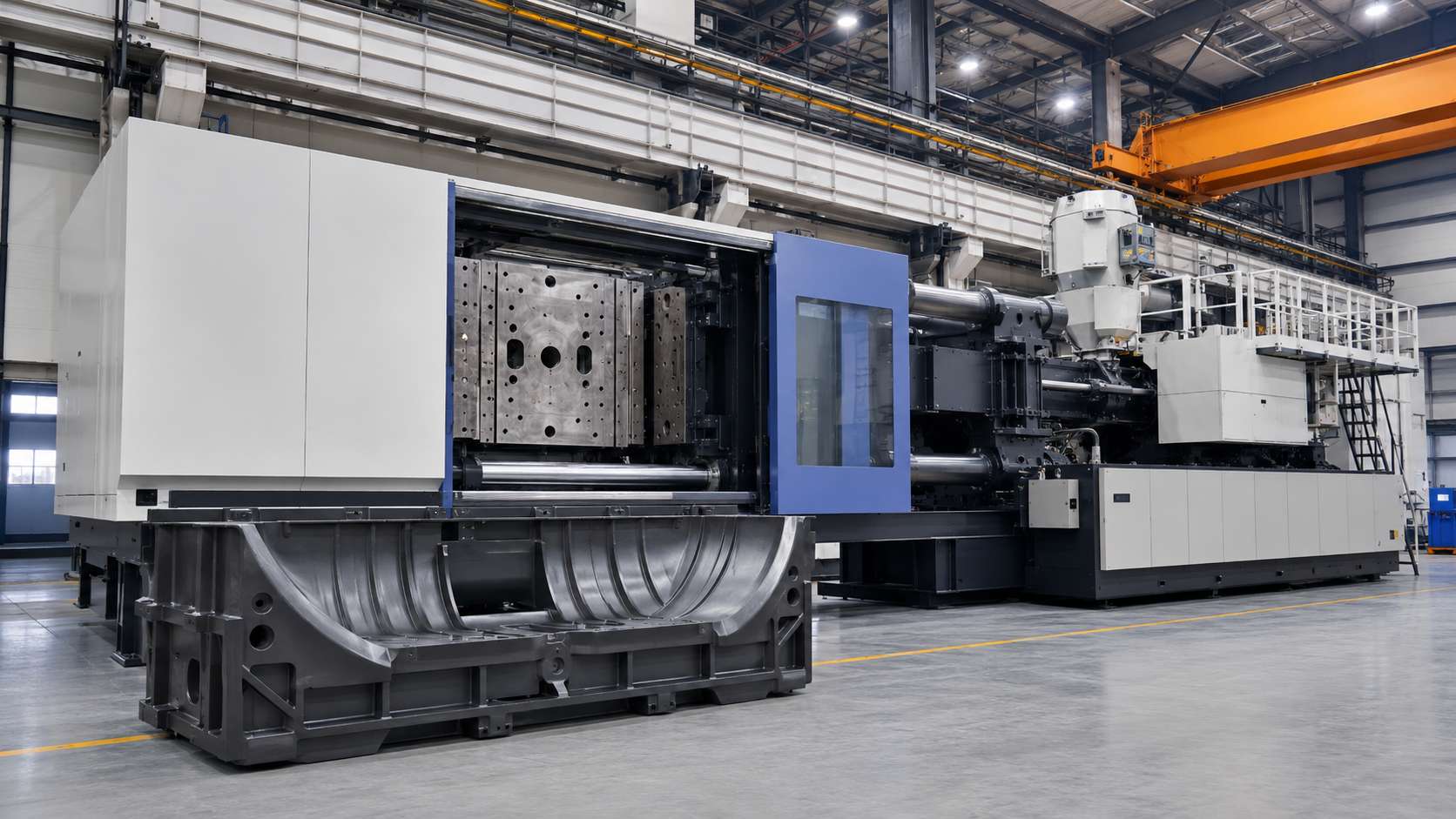
Learn how to evaluate high-tonnage injection molding capacity for large components using key engineering factors for reliable, efficient production.
Read more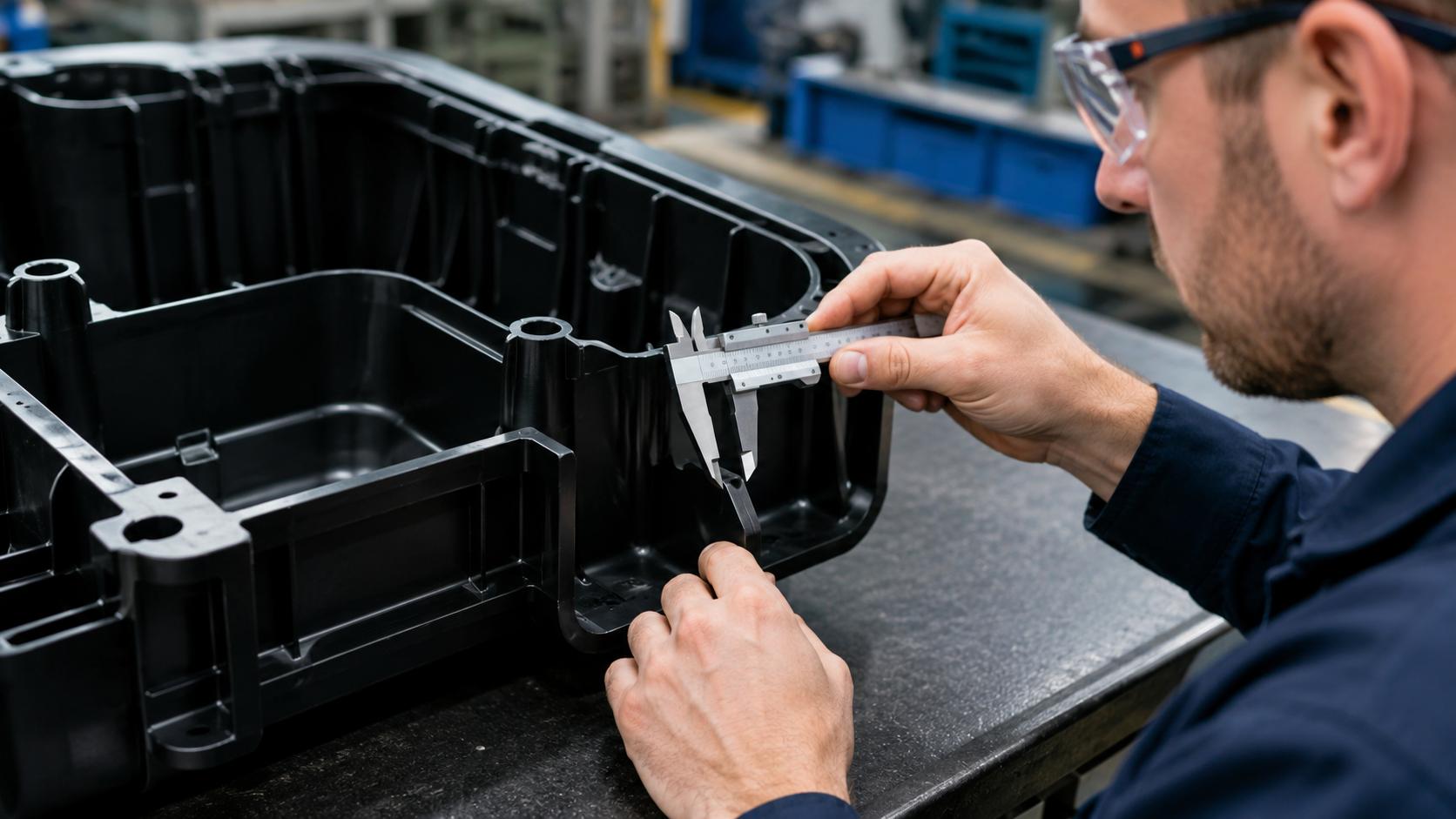
Learn the key wall-thickness guidelines for large injection-molded components that product developers must follow to optimize part performance.
Read more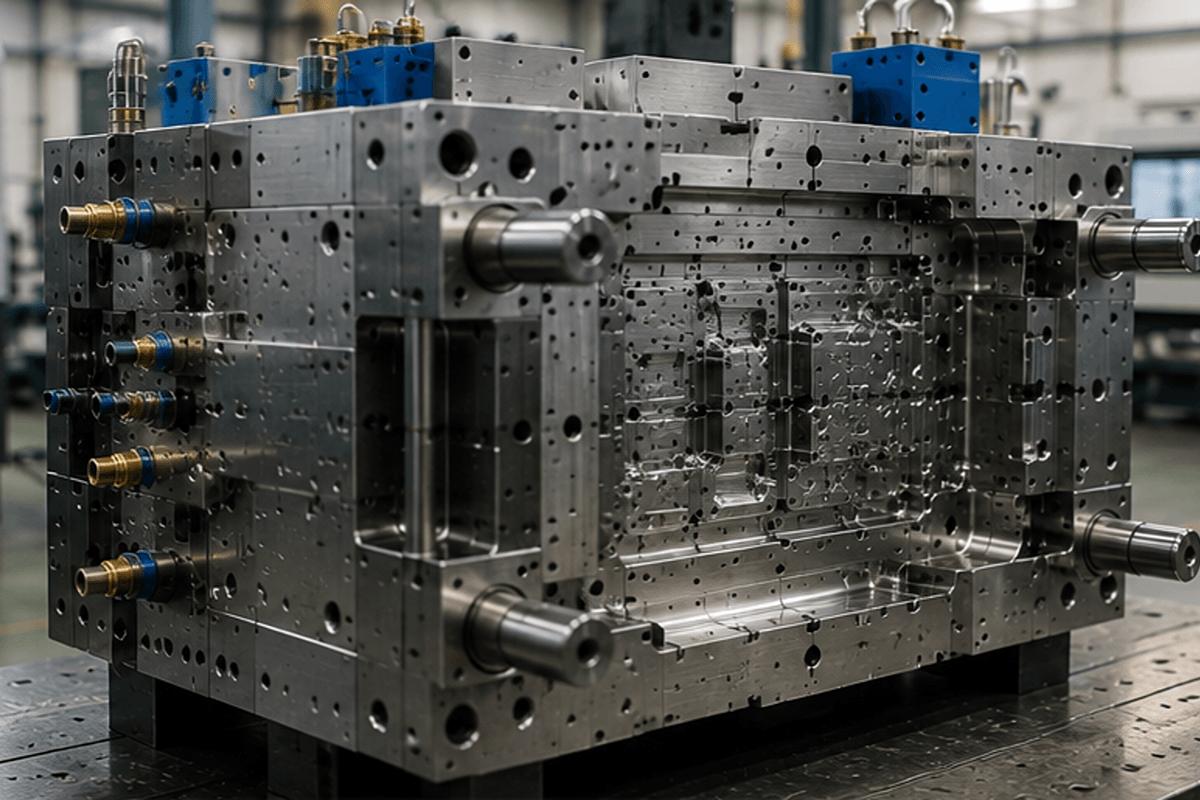
Learn practical ways to assess tooling quotes from injection molding service providers in China for better sourcing decisions and long-term production value.
Read more
Discover the real cost drivers behind large-part injection mold tooling to understand what influences tooling investment before requesting quotations.
Read more