January 1, 2026
How Large Plastic Injection Molding Creates Plastic Chairs

Overview
- This article guides OEM engineers through the process of turning plastic chair designs into high-quality, large-scale products using injection molding. It explains how precision at every stage, from shaping molds to ejection, ensures consistent quality and efficiency.
- Engineers can see how careful control of materials, temperature, and timing minimizes defects and supports high-volume production.
- The discussion also highlights why injection molding is preferred for its repeatability and ability to deliver ready-to-use components. Richfields Corporation provides the expertise and solutions to help teams achieve reliable, scalable chair production.
Durability, efficiency, cost-effectiveness. When it comes to manufacturing plastic chairs, Original Equipment Manufacturing (OEM) engineers must ensure they choose the method that meets all three. Turning designs into full-scale products demands precision that not every process can deliver.
Large plastic injection molding rises to this challenge. At Richfields Corporation, our advanced techniques allow OEM teams to produce high-quality furniture components at scale. This article explains how large plastic injection molding creates plastic chairs. From material selection to injection, this guide provides a clear roadmap for consistent production. Read on to learn more.
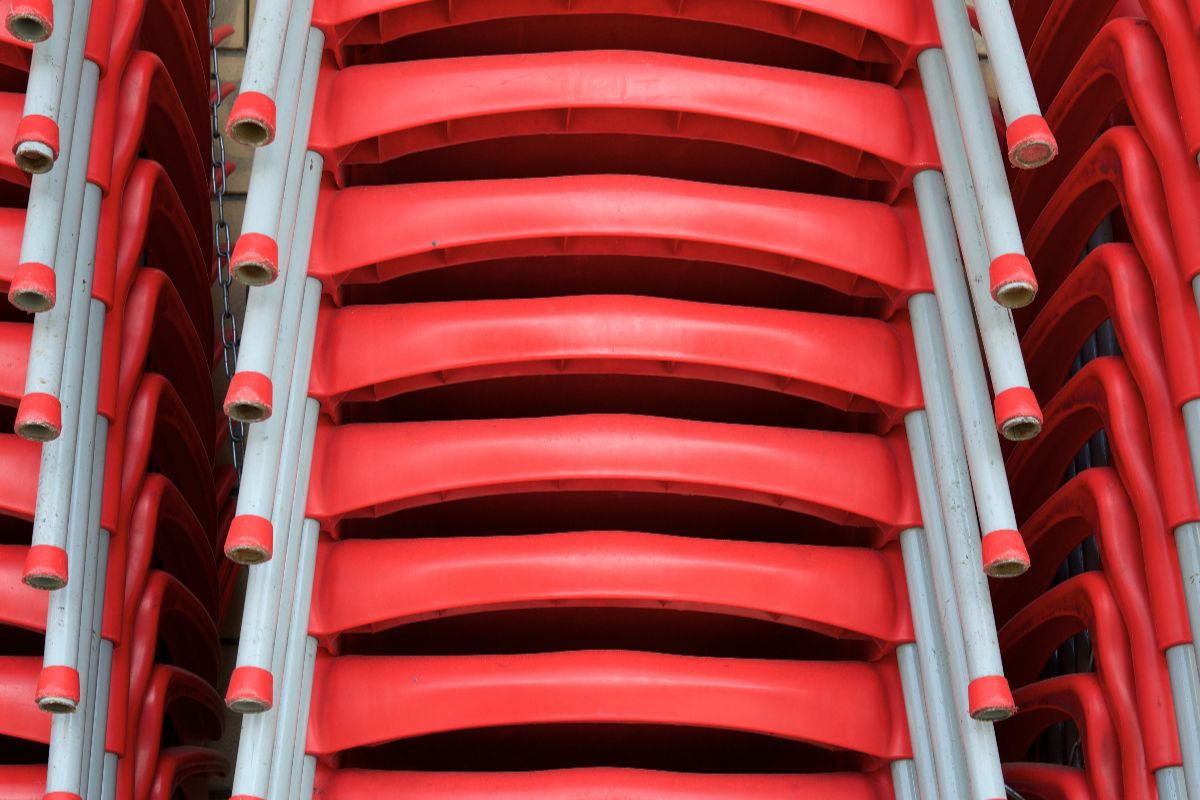
The injection molding process for plastic chairs begins with shaping precise molds for immediate assembly. Each step is carefully controlled to ensure dimensional accuracy and consistent quality across production.
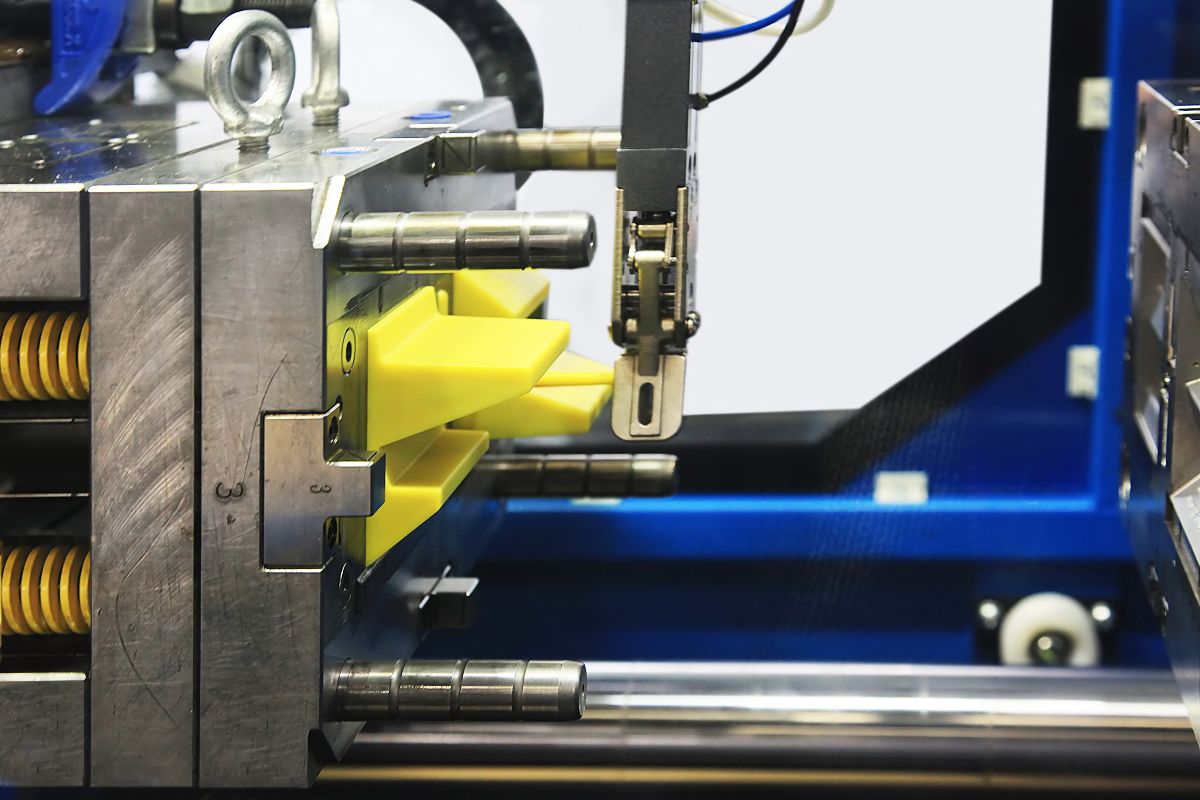
Product manufacturers begin by designing a two-part mold (core and cavity) shaped for the chair’s contours and reinforcement zones. Using Computer Numerical Control (CNC) machining, engineers maintain product uniformity across high-volume production. Cooling channels are then strategically integrated to regulate material flow and temperature. This improves surface finish, minimizing warping during molding.
Proper mold formation sets the foundation for reliable production. Through precise shaping and controlled cooling, OEM professionals reduce the need for post-processing. This allows them to avoid costly reworks and minimize material waste throughout production.
Once the mold is complete, thermoplastic resin is prepared for molding. Materials like Polypropylene (PP) or polyethylene (PE) are loaded into the machine’s hopper. They are heated in the barrel through a rotating screw system to ensure they reach the optimal viscosity for filling.
Precise temperature and pressure control are essential for consistent melt flow. Excessive heat can degrade the resin, while insufficient melting results in poor bonding. Manufacturing engineers must ensure that the material achieves the flow stability necessary to form thick, ergonomic furniture designs.
After melting the material, it is then injected into the mold under high pressure. Injection speed and pressure are adjusted based on the chair’s design complexity and thickness. Small design details require faster injection, while slower speeds are a must for the seat’s overall structure. This step demands timing and pressure calibration to ensure every cavity is filled before the material cools.
Proper injection helps avoid sink marks or short shots, issues that compromise the product’s strength and appearance. Design-to-production engineers may also use sensors and flow simulations to fine-tune injection cycles. This real-time control helps them maintain repeatability, which is crucial for high-volume manufacturing.
Next, cooling begins immediately to solidify the material into its final shape. Integrated cooling channels circulate temperature-controlled water or oil through the mold. This absorbs heat efficiently, contributing to minimized cycle times.
Note: the cooling rate determines the dimensional accuracy of the finished product. If uneven, it may face issues with warping, shrinkage, or stress-induced damage. This can be prevented by determining the optimal cooling rate based on the material type and wall thickness. With proper temperature regulation, each chair retains its structural rigidity without the need for secondary finishing.
Ejector pins carefully release the chair after every part is fully solidified. This stage must be executed with precision to prevent surface damage, especially for large components. Ejection systems can be fine-tuned to apply even pressure across the mold’s surface area.
Smooth ejection matters because it supports faster production cycles. Automated systems often remove the finished chairs from the mold and transfer them to quality inspection. Through consistent performance, OEM specialists sustain production flow without compromising the quality of every molded piece.

Injection molding remains the preferred method for plastic furniture due to its efficiency, precision, and mass-production-friendly qualities. They not only ensure premium quality for client satisfaction, but they also benefit OEM teams due to their cost-effective processing. Below are reasons why it’s popular for large-scale furniture production.
This advanced technique maximizes production speed while minimizing material waste. Once molds are optimized, it shortens the cycle time for each chair. This allows engineers to maintain high-quantity targets without sacrificing quality, helping lower per-unit costs in large volume operations.
The method’s precision eliminates variability and ensures consistency in strength, shape, and finish. Using calibrated molds and advanced process controls, professionals ensure identical results across thousands of runs. This high repeatability guarantees uniform quality and performance, which is crucial for securing client trust.
Injection-molded chairs often require minimal post-processing, thanks to the technique allowing smooth finishes and integrated design features. Textures, logos, or reinforcement parts can be incorporated directly into the mold to eliminate assembly difficulties.
Understanding how large plastic injection molding creates plastic chairs enables OEM engineers to optimize every stage of furniture production. From mold formation to quality control, the process allows professionals to meet stringent standards consistently at a lower cost.
Richfields Corporation offers the technical expertise and advanced molding solutions you need to produce high-precision seating with confidence. Contact us today to discuss how we can support your next project.
How do you choose the right injection molding process for your industry? Analyze your part’s needs Select the right process and material Choose the right machine and partner Consider production factors Overview Selecting the right injection molding process is a critical decision for manufacturers aiming to balance performance, efficiency, and cost. Evaluating your part’s functional […]
Read more
Overview Supply chain disruptions, equipment downtime, quality control gaps, labor shortages, and rising operational costs create major challenges for U.S. manufacturers. Early problem detection and modern techniques, such as predictive maintenance, high-precision manufacturing, and data-driven oversight, help prevent inefficiencies and protect production schedules. Partnering with expert manufacturers like Richfields ensures smoother operations, consistent output, and […]
Read more
Overview This article explains what teams should be prepared for when moving from low-volume manufacturing to a tooling-based production approach. It outlines how planning and process discipline change once parts are produced at scale. It also highlights common challenges that arise during scale-up and how structured processes help reduce risk over time. By understanding these […]
Read more
Why are more manufacturers turning to injection molding over traditional methods? High production speed Cost-efficient for high-volume production Precise and repeatable processes Wide material selection Reduced post-processing Overview This article walks through the key reasons teams reassess their manufacturing approach as production volume and technical demands increase. Injection molding makes it easier to produce large […]
Read more