February 15, 2026
Why Size and Capacity Matter in Plastic Injection Molding Operations
Overview
- Selecting the right injection molding machine size is vital to prevent defects such as flashing, warping, or incomplete fills.
- Proper tonnage and shot volume ensure part consistency and protect molds from stress.
- Richfields specializes in providing tailored presses worldwide that precisely match project requirements, securing quality production and cost efficiency with expert machine sizing solutions.
Maintaining quality and consistency in large parts requires more than standard production methods. This is why understanding why size and capacity matter in plastic injection molding operations is essential for achieving precision, repeatability, and minimal defects.
Manufacturers for companies in the USA often face challenges when scaling designs, which makes choosing the right equipment and capacity critical. A large injection molding company in China can provide the machinery, expertise, and process control needed to meet strict tolerances and high-quality standards. By aligning part size with the proper equipment, production runs achieve both efficiency and reliability from start to finish. Keep reading to learn more!
Precision in large components depends heavily on matching machine capabilities to part requirements. Without sufficient clamping force, barrel capacity, or machine stability, quality issues quickly emerge. This highlights the importance of using the right high-capacity molding equipment.
Low tonnage allows molten polymer to push mold halves apart, causing flashing, uneven surfaces, or distorted dimensions. Tonnage should be aligned with the component’s projected area and flow length, typically using a baseline of 2–5 tons per square inch.
Adequate clamping maintains part integrity, preserves mold longevity, and prevents long-term deformation.
When the part volume exceeds the machine’s maximum injection capacity, short shots, voids, or inconsistent density can occur. Shot volume must account for the total part volume plus runners, with a 20–30% safety margin to avoid underfilled or overworked barrels.
Proper matching ensures complete fills, uniform structural strength, and minimized rework.
Overfilling the mold can lead to overpacking, flashing, or internal stresses that compromise dimensional accuracy and surface quality. Balancing the molten material precisely to the mold’s requirements, supported by flow simulations, prevents defects and reduces material waste.
Optimizing efficiency and cost is essential in large-scale molding operations. Understanding how machine capacity, cycle times, and material usage interact allows engineers to streamline processes, reduce waste, and maintain consistent quality.
Selecting a press that matches part dimensions, mold complexity, and material needs ensures the correct clamping force and shot capacity. This prevents defects, shortens cycle times, and minimizes unnecessary energy consumption. Properly sized equipment balances production speed, quality, and operational cost.
Selecting a press that matches part dimensions, mold complexity, and material needs ensures the correct clamping force and shot capacity. This prevents defects, shortens cycle times, and minimizes unnecessary energy consumption. Properly sized equipment balances production speed, quality, and operational cost.
Correct shot volume is critical to avoid underfilling, which can create voids or weak spots, and overfilling, which may lead to flash or warping. Properly matched volumes optimize cycle times, reduce material waste, and maintain uniform part quality across production runs.
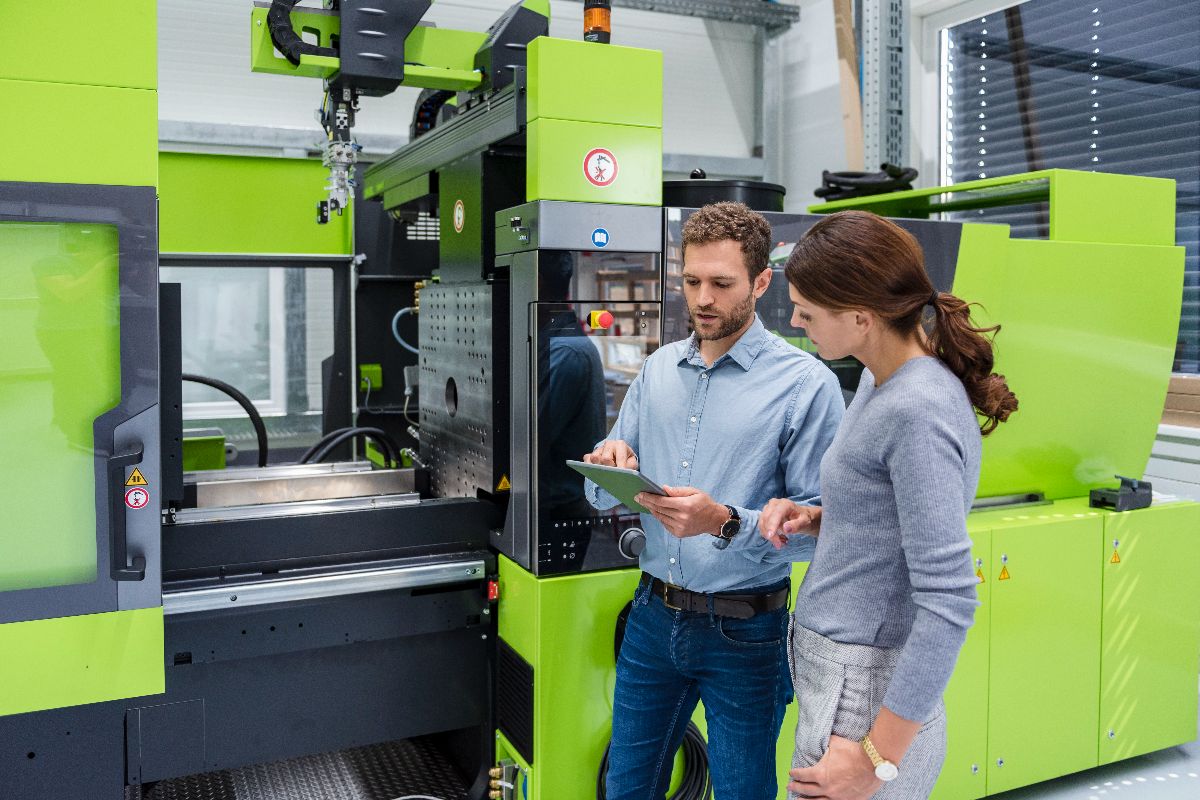
Maintaining the condition of your injection molding machines and molds is critical for consistent production quality and efficiency. Regular inspections and preventive maintenance detect wear, misalignment, or damage early, reducing downtime, defects, and costly repairs.
Using a machine that doesn’t match part requirements can lead to inconsistent quality, longer cycles, and increased equipment wear. Machines with insufficient clamping force or shot capacity may struggle with complex molds, while oversized machines can waste energy and reduce process control.
Evaluating equipment relative to part size, material, and production volume ensures consistent performance and protects tooling.
Matching clamping force, shot volume, and part complexity lowers the risk of defects such as warping or short shots. Properly sized machines maintain uniform quality, reduce energy waste, and extend the lifespan of molds and presses. This careful alignment of equipment to production needs is critical for reliable and efficient injection molding operations.
Before committing to a plastic injection molding project, several important factors identify its success, from design intricacies to production efficiency. At Richfields, a large injection company in China, we understand these that help engineers optimize manufacturability, control fees, and ensure that the final product meets quality standards.
With decades of experience, Richfields ensures these factors are carefully matched to every project, supporting reliable, efficient, and high-precision molding.
Understanding why size and capacity matter in plastic injection molding operations is essential for ensuring part quality, minimizing defects, and optimizing production efficiency. Matching machine tonnage, shot volume, and mold dimensions to your project needs can save time and improve overall output consistency.
Richfields brings decades of expertise in large-scale injection molding, offering tailored solutions that align machine capabilities with complex project requirements. Contact us today to discuss your next project and ensure reliable, high-quality production from start to finish.
What are the common large-part design mistakes that complicate manufacturing? Ignoring manufacturing process limitations Over-specifying tolerances Poor material selection Inconsistent wall thickness Neglecting draft angles Covercomplicating the design Using non-standard components Overview Large-part injection molding often fails when designs ignore limitations involved in the processing. To avoid this, early collaboration is the best way to […]
Read more
Overview Large plastic injection molding uses high-tonnage machines to mold large, thick, and complex parts with precision and consistency. The procedure supports designs that require significant clamping force, shot volume, and physical mold size, ensuring defect-free, structurally sound components. Richfields is a leading provider, offering advanced machinery and technology to deliver high-quality large plastic injection […]
Read more
Overview Expanding product lines with new SKUs involves overcoming design and manufacturability challenges that often cause costly delays. Careful planning, partner evaluation, and thorough vetting are essential to ensure scalable, high-quality production. Richfields offers expert injection molding support, early engineering input, and advanced tooling to speed up development and deliver precise, reliable results worldwide. Expanding […]
Read more
Overview Successful molding projects require early collaboration between engineering and production teams to streamline design and manufacturing. Integrating expertise with advanced technology and in-house facilities ensures precision, quality, and efficient project execution. Richfields exemplifies this approach by engaging clients from initial concept through to delivery, guaranteeing optimized results and trusted global partnerships. Success in intricate […]
Read more