February 15, 2026
Common Large-Part Design Mistakes That Complicate Manufacturing
Overview
- Large-part injection molding often fails when designs ignore limitations involved in the processing.
- To avoid this, early collaboration is the best way to align design requirements and manufacturability of the material.
- At Richfields, we work closely with clients to deliver high-performing large parts across industries.
Large-part design mistakes that complicate manufacturing remain a critical challenge for companies in the USA. Even minor oversights during the design phase can ripple through production, causing delays, higher costs, and frustration for engineering teams.
These issues often affect part quality, efficiency, and overall manufacturability, making it harder to meet project timelines. Collaborating with experienced injection molding specialists early in the process can help companies navigate these complexities and avoid costly setbacks.
In this article, we’ll explore why large-part designs often run into problems and share insights to help companies prevent common pitfalls.
Designing large parts without considering manufacturing constraints often leads to inefficiencies that slow production. When designers overlook the physical boundaries of the press or the flow dynamics of the resin, it results in difficulties on the factory floor.
Materials may also behave differently at scale, causing warping, sink marks, or incomplete fills if the process isn’t considered early. Ignoring these limits also puts stress on molds and equipment, reducing tool life and introducing quality inconsistencies.
Applying extremely tight tolerances to non-critical features creates significant hurdles during production. Achieving these precise dimensions often requires slower cycle times, more complex tooling, and additional finishing steps that drive up the price per part.
When tolerances are tighter than necessary, parts face rejection more frequently due to minor material shrinkage or variable cooling rates. This leads to a lower total yield and delays delivery.
Selecting a material based solely on cost or aesthetics can create serious performance issues for large parts. High-scale components require resins that can withstand prolonged thermal exposure and high pressure.
Ignoring how a specific polymer responds to these factors leads to failure during the cooling phase or even structural collapse in the field. To avoid this, strategic material selection is the key to gaining a high-performing final product.
Wall thickness refers to the distance between the interior and exterior surfaces of a molded part. In injection molding, consistent wall thickness is critical because it determines how molten plastic flows into the mold, cools, and solidifies.
When designers fail to maintain uniformity, the result is a series of uneven cooling rates. Industry standards suggest that keeping wall thickness variations within +/- 25% is vital to preventing these defects in large-format parts.
Properly designed draft angles reduce stress on both the mold and the part, enabling consistent production and longer tool life. These tapered surfaces allow the finished part to release cleanly from the metal cavity without friction.
When draft angles are omitted or too shallow, parts often stick inside the mold. As a result, technicians may need to apply excessive force during ejection, which can lead to permanent part damage.
Adding excessive features or combining multiple joining methods can make large-part production unnecessarily complex. Each additional component, boss, or fastener introduces potential alignment issues and increases mold complexity.
When a design becomes too dense, assembly becomes labor-intensive, the margin for error increases, and overall production efficiency drops. Consolidating functions into fewer features is the preferred method for achieving optimal results.
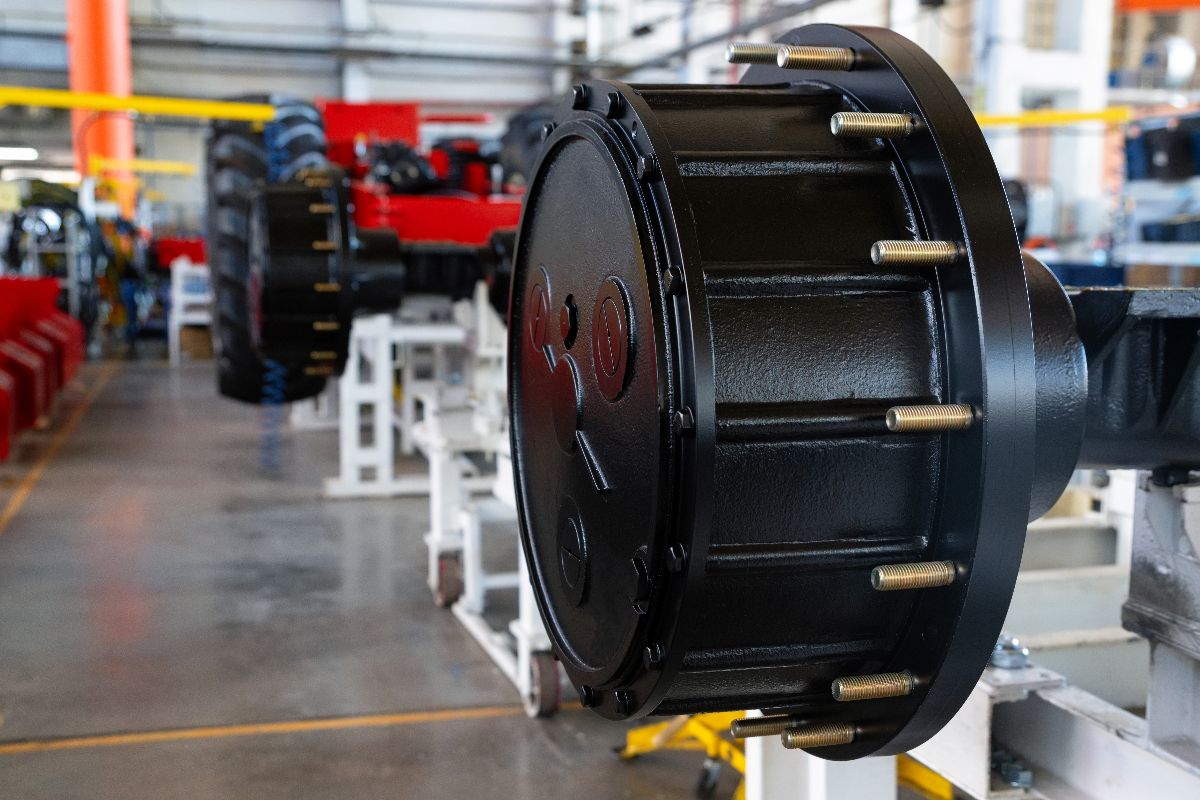
Standardized sizes allow molds and assembly equipment to function with peak efficiency, whereas unusual specifications often require custom, expensive tooling. Opting for non-standard fasteners or inserts complicates production planning and can negatively affect the final integrity of the molding.
A more effective solution is to design parts using standard, readily available components. This approach ensures that companies in the USA can source replacement parts quickly and keep their production lines moving
Early collaboration with manufacturers is crucial for large-part injection molding because it helps align design and production from the very beginning. It ensures that the manufacturing process is fully understood, which streamlines decision-making, reduces inefficiencies, and strengthens the overall production workflow.
Richfields embodies this collaborative spirit by serving as a technical partner from the earliest stages of development. Rather than simply receiving a final design, Richfields works alongside clients to refine geometries. This proactive engagement identifies potential failure points while they are still easy to fix, ensuring that plastic injection services result in a smooth production run.
Large-part injection molding is as much about design foresight as it is about production expertise. Ensuring manufacturability requires careful attention to process limitations, material behavior, tolerances, wall thickness, and part complexity. By integrating these considerations early, companies can improve overall efficiency.
Partnering with experienced specialists like Richfields guarantees that these best practices are applied from the start. Our collaborative approach helps refine large-part designs for the best results. Contact us today to turn complex designs into reliable, manufacturable parts.
Overview This article explains what teams should be prepared for when moving from low-volume manufacturing to a tooling-based production approach. It outlines how planning and process discipline change once parts are produced at scale. It also highlights common challenges that arise during scale-up and how structured processes help reduce risk over time. By understanding these […]
Read more
Why are more manufacturers turning to injection molding over traditional methods? High production speed Cost-efficient for high-volume production Precise and repeatable processes Wide material selection Reduced post-processing Overview This article walks through the key reasons teams reassess their manufacturing approach as production volume and technical demands increase. Injection molding makes it easier to produce large […]
Read more
Overview Large-part injection molding makes it easier for engineers to create complex designs that are strong and reliable, all while speeding up the process. It simplifies building tough structures without compromising quality or causing expensive errors. With this method, features can be integrated directly into the parts, keeping dimensions precise and cutting down on assembly […]
Read more
Overview Large-part injection molding offers a reliable solution for manufacturing playground equipment that meets rigorous performance standards. It produces components that are durable, visually consistent, and capable of withstanding heavy environmental stress. This process allows intricate detailing, vibrant color integration, and high-volume repeatability while reducing the need for secondary assembly. For OEM engineers seeking efficiency, […]
Read more